
Attics where the ductwork runs
When your ducts and air handler sit in the attic, foam on the roofline brings them inside the insulated space, so they stop working through summer heat. That's where foam earns its higher price.
Hot upstairs rooms and a power bill that climbs every summer can ease once foam seals the underside of your roof.
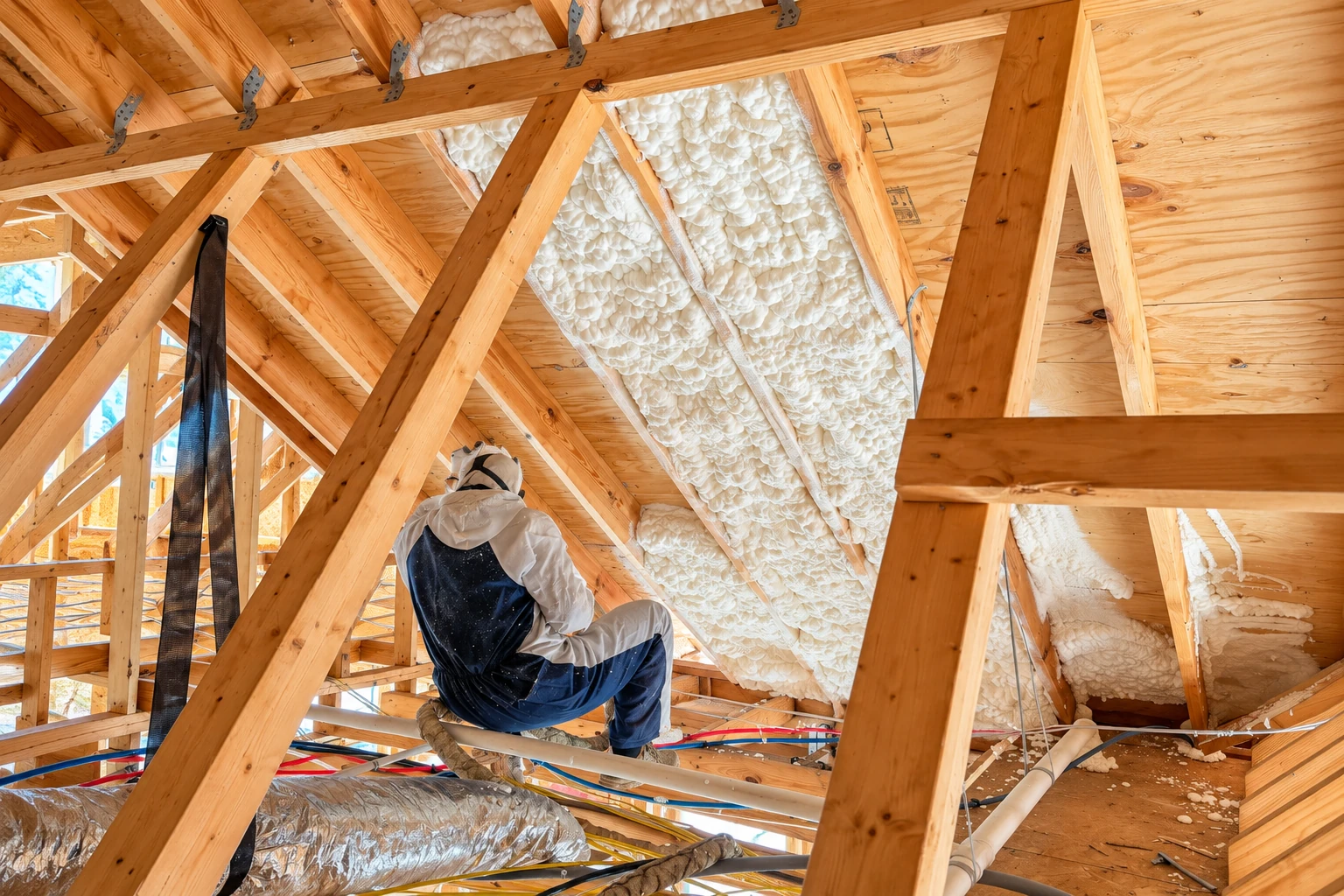
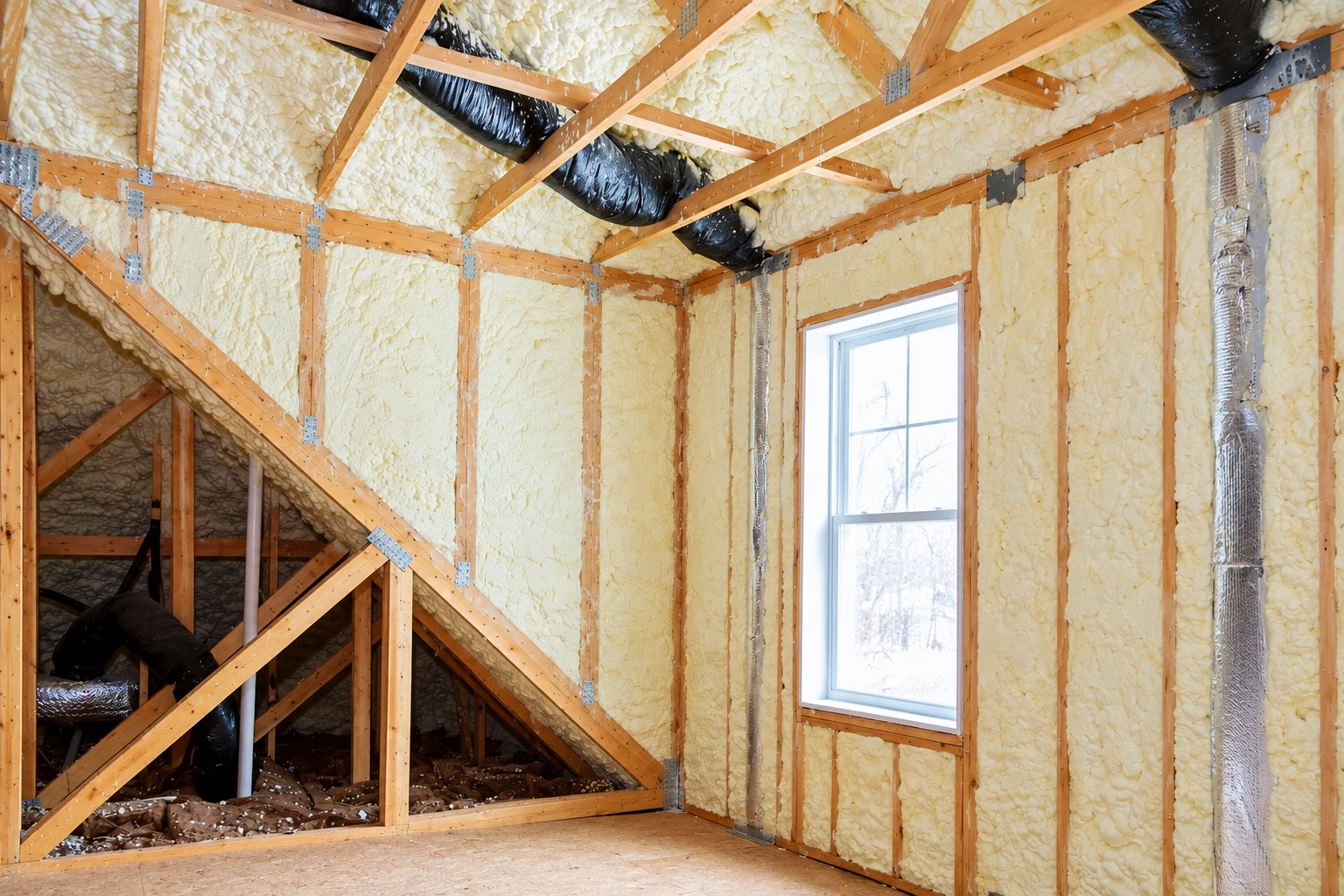
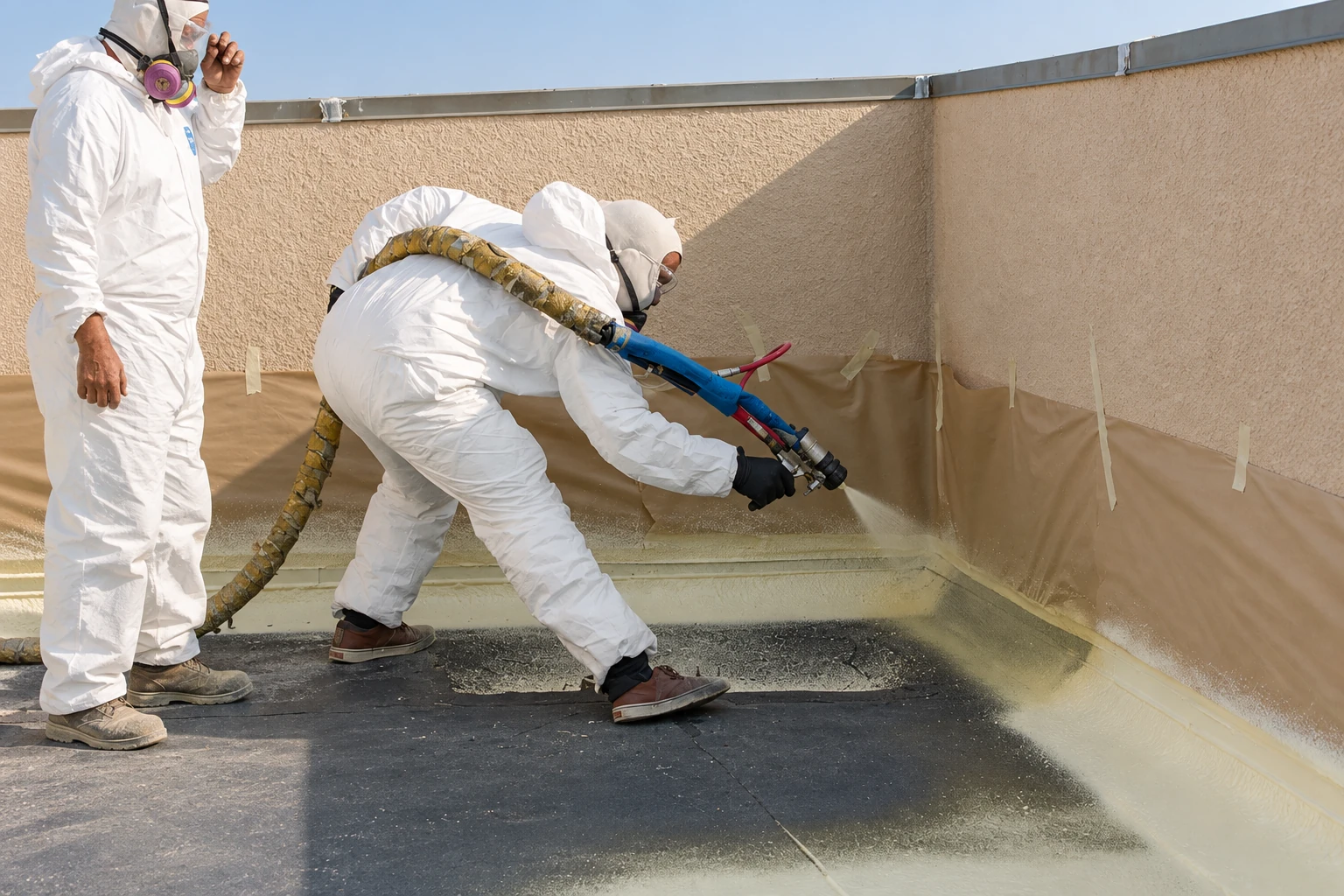
Open-cell foam insulation is sprayed onto the underside of your roof decking, where it expands into the gaps and seals the attic while it insulates, so the attic becomes part of the house you heat and cool. Comfort Bartlett Insulation Company installs it in Bartlett and in cities across the Memphis area, including cities over the state lines in Mississippi and Arkansas.
Most people call us because the upstairs stays hot in July, the room over the garage never feels right, or the ductwork in the attic is baking in summer heat. Foam isn't always the answer, because it costs more than attic air sealing, which closes the gaps before any insulation goes in, followed by a top-up of blown-in insulation, loose fill blown through a hose, and that pairing usually wins unless your ductwork lives up there. The price turns on the size of your roofline, how many layers go on, how easy the attic is to reach, whether old material has to come out and whether the exposed foam needs a coating, while the schedule turns mostly on any roof repair that has to happen first. Before work starts, we check with the city or county office about what the job calls for and take care of any permit and inspection that's ours to handle, and I'll give you your own figure once I've seen the house.
I come out to look at the house and write the estimate myself, and I lead the crew that does the work, so the person who made the plan is the one in your attic.
If sealing the gaps and topping up loose fill would do the job for less, I'll tell you so, because I'd rather lose a sale than sell your house something it doesn't need.
Since 2017 we've worked for homeowners, landlords and property managers who want plain answers and tidy work, and we treat every customer with courtesy, at the door and on the phone.
I start with the roof, because open-cell foam goes right onto the underside of the decking and covers it, so a leak or a wet spot needs to be found before we spray, not after. If I find one, I'd rather see the roof repaired first, since foam over damp wood only hides the problem. I also look over the old insulation, the vents and the wiring, and when a job turns up wiring, gas or heating and cooling work, we bring in a licensed contractor in that trade for that part. Before the spray day, I go over with you whether the exposed foam in your attic will need a coating. Then our crew covers what needs protecting, sprays the roofline and gable walls, trims the foam where it's built up too far and cleans up before we leave.
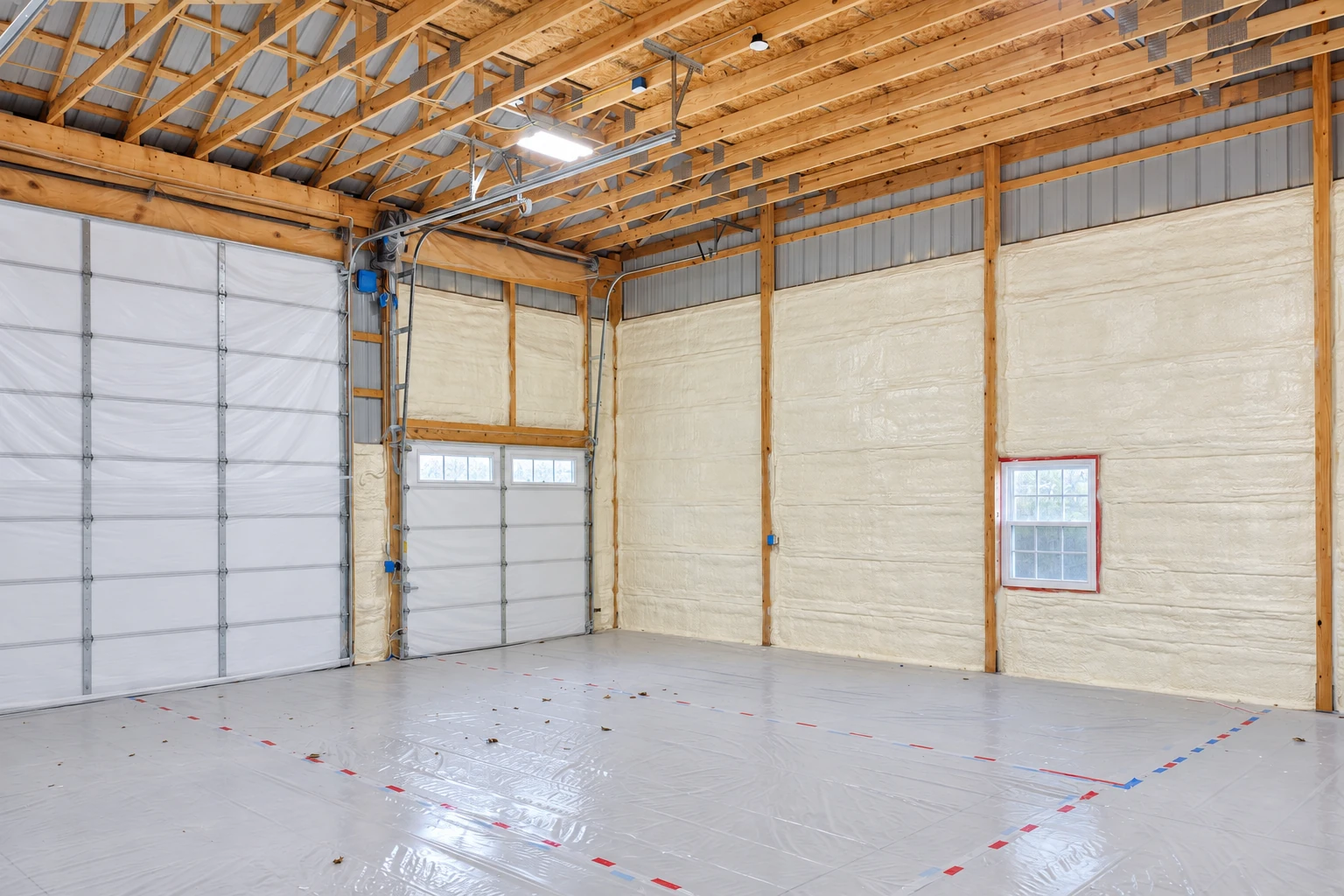
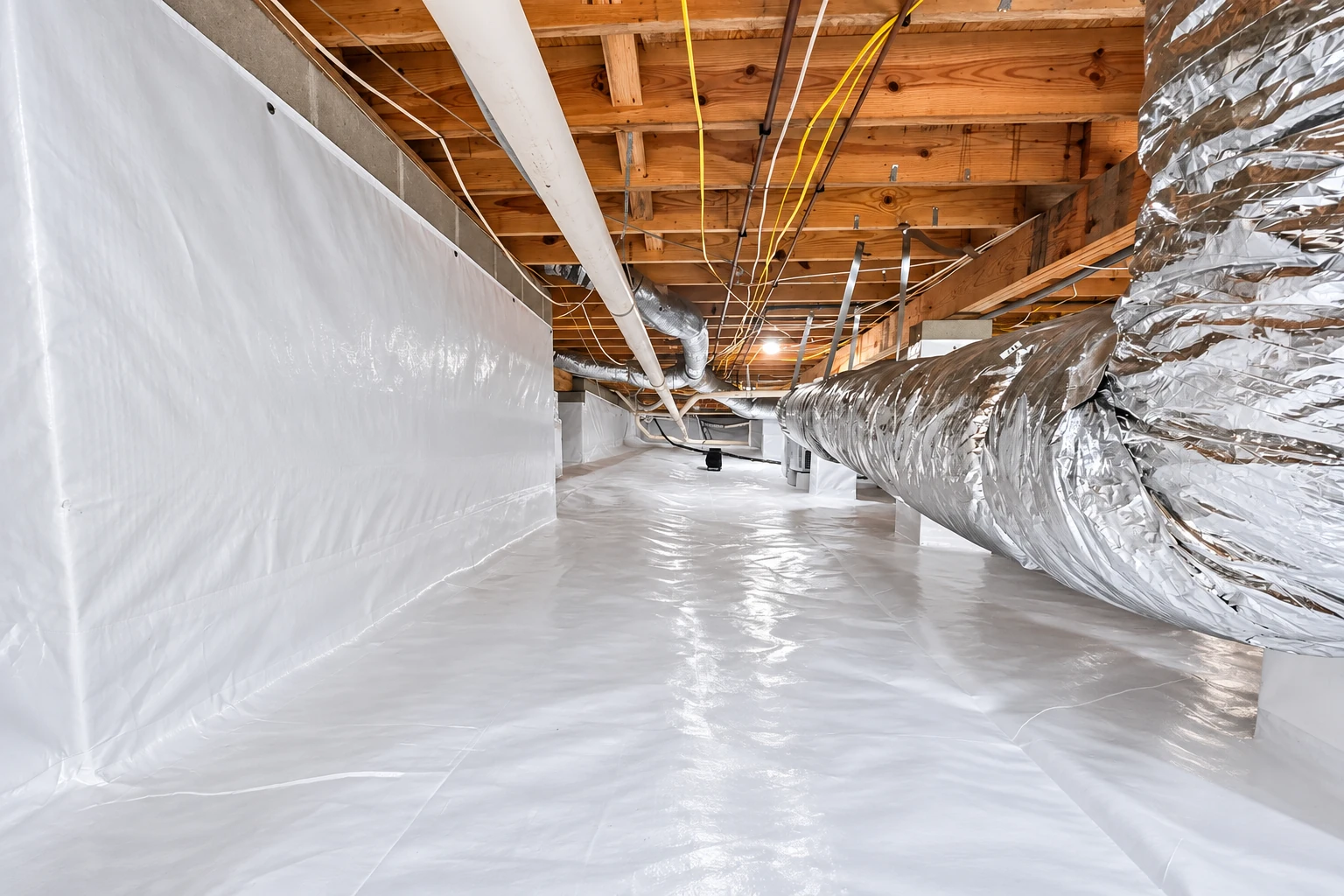
We spray the same foam in shops, offices and rental buildings as part of our commercial insulation work. Foam takes care of the top of the house, but damp coming up from the ground is a separate job, and a crawl space vapor barrier is often the right partner when the floors feel cold or the crawl space smells musty.
When your ducts and air handler sit in the attic, foam on the roofline brings them inside the insulated space, so they stop working through summer heat. That's where foam earns its higher price.
Rooms tucked under a sloped roof run hot because there's little space for loose fill, and foam sprayed onto the roofline covers the tight angles that blown-in material can't reach well.
Landlords and property managers call us when a unit runs hot, and we plan the spray day around your tenants, so they know well ahead when they'll need to be out.
When the drywall is off for a remodel or an addition, open-cell foam fills the stud bays and seals around pipes in one pass, which is hard to match once the walls close up.
Send the form and we'll reply within one business day to set a time for me to come out, look at your roof and attic, and write a free estimate with no obligation.
Let us know where the hatch or pull-down stairs are and whether the space is tight, because how easy the attic is to reach shapes both the visit and the estimate.
If the roof has leaked, even years ago, say so when you write, because I want to look closely at those spots before any foam goes onto the decking.
You can reach us from 6 AM to 11 PM on weekdays and from 7 AM to 11 PM on weekends, and every caller gets a full, courteous answer.
These photos show sprayed rooflines, gable walls and open stud bays, the kinds of finishes and layouts we can talk through at your estimate.
Here are plain answers to what homeowners usually ask about open-cell foam, from the price and the roof to the day you're out.
Open-cell spray foam in the Memphis area usually costs about $0.50 to $0.80 per board foot, which is one square foot of foam an inch thick. Each pass expands to about 3 inches, and an attic roofline often has room for two layers, so the size of your roof and the number of layers set most of the price. I'll measure yours when I come out.
Open-cell usually fits a Bartlett attic well when price matters, and it's the more common choice in southern homes. It costs less than closed-cell foam, the dense kind that blocks moisture, though closed-cell is about twice as effective per inch. Open-cell is also much better at blocking sound, which matters to owners who hear the street or the rain.
Plan to be out for at least 24 hours, because Consumer Product Safety Commission staff guidance says residents should leave for at least that long. EPA guidance adds that you shouldn't come back until the foam has cured and the house has been aired out and thoroughly cleaned. That goes for kids and pets too, and I'll walk you through each step before the day.
Bartlett's Code Enforcement office is the place to ask, since it reviews and permits all projects in the city. Its permit list names water heaters, HVAC systems, electrical work, siding and windows but doesn't mention insulation, so that list alone doesn't settle a foam job. The office takes permit questions at 901-385-6425, and it's the check we make before we start.
It's uncommon, and it comes down to water. Research on spray-foamed roofs found isolated failures, either rotted decking or foam pulling loose from it, and the main causes were roof leaks, condensation and moisture already in the building materials. That's why a sound, dry roof is the starting point and why we check yours first.
Often it does, because most spray foams today need a fire-retardant coating, applied right on the foam, when they're left exposed to the attic. Whichever contractor you hire, ask whether the quote includes it. It's one of the things I go over with you at the estimate, so you know before you decide.
Call (901) 295-2959 or send the form, and a quick note about when the roof was last replaced helps me know what to look for.